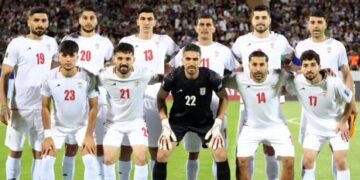






Iran has announced that it will boycott next week’s FIFA World Cup finals draw in Washington after the United States refused to grant entry visas to several members of its delegation — a decision Tehran insists is politically motivated.
The Iranian Football Federation confirmed the boycott on Friday, saying it had already informed FIFA of its stance.
“We have informed FIFA that the decisions taken have nothing to do with sports, and the members of the Iranian delegation will not participate in the World Cup draw,” a federation spokesperson told state television.
Reports of visa refusals first emerged on Tuesday on Iranian sports outlet Varzesh 3, which revealed that key officials — including federation president Mehdi Taj — had been denied entry. Only four members of the delegation, among them national team coach Amir Ghalenoei, were granted visas for the December 5 draw.
Taj condemned the visa decision on Thursday, calling it “purely political” and urging FIFA President Gianni Infantino to intervene.
“We have told the head of FIFA, Mr. Infantino, that it is purely a political position and that FIFA must tell them [the U.S.] to desist from this behaviour,” he said.
Iran qualified for the 2026 World Cup in March, sealing a fourth consecutive appearance and their seventh overall. Despite never advancing to the knockout stage, the team’s history includes memorable moments — none more iconic than their 2–1 victory over the United States at the 1998 tournament in France. The Americans reversed that result with a 1–0 win in their 2022 group match.
This latest diplomatic rift unfolds against a backdrop of more than four decades of strained U.S.–Iran relations. Although the two nations had engaged in high-level nuclear negotiations earlier this year, talks collapsed after Israel launched a major bombing campaign against Iran in mid-June, triggering a 12-day conflict that briefly drew U.S. military involvement.
With tensions already high, Iran’s boycott signals yet another setback in efforts to separate global sport from geopolitics — a challenge that continues to shadow major international competitions.
SOURCE: The Guardian