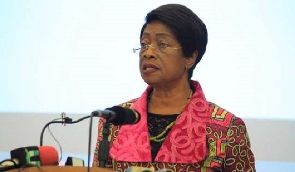






Former Chief Justice Sophia Akuffo has described the allegations that led to the removal of Justice Gertrude Torkornoo from office as weak and unconvincing.
According to her, the decision by President John Dramani Mahama to remove Justice Torkornoo has further weakened the judiciary. Speaking on Tuesday, September 2, 2025, the Council of State member said the processes that culminated in the Chief Justice’s removal amounted to a “rigmarole” undeserving of any judge, let alone the head of the judiciary.
“The allegations lacked the gravity to warrant such a grave outcome as the removal of the Chief Justice,” she stressed. “I pray to God that no Chief Justice or judge should ever be subjected to such a rigmarole again.”
Madam Akuffo further argued that Justice Torkornoo did not receive a fair hearing during the proceedings. “Even though it was not a trial strictly speaking, it was conducted as though it were a treason trial,” she lamented.
President Mahama on Monday, September 1, 2025, announced the removal of Justice Torkornoo from office in line with Article 146(9) of the 1992 Constitution. A statement from the Presidency said the decision followed the report of a five-member Committee of Inquiry constituted under Article 146(6) to investigate petitions against the Chief Justice.
The committee, chaired by Supreme Court Justice Gabriel Scott Pwamang, concluded that grounds of “stated misbehaviour” under Article 146(1) had been established and therefore recommended her removal. Other members of the committee include former Auditor-General Daniel Yaw Domelevo, Major Flora Bazaanura Dalugo of the Ghana Armed Forces, and Professor James Sefah Dzisah of the University of Ghana.
Justice Torkornoo had earlier been suspended on April 22, 2025, after a prima facie case was established from three separate petitions filed against her. The suspension was carried out in consultation with the Council of State, pending the committee’s inquiry.
Presenting the report, Justice Pwamang explained: “Our mandate under Article 146(7) and (8) was clear—to inquire into the petitions in camera, allow the Chief Justice to defend herself, and then make recommendations to the President.”