





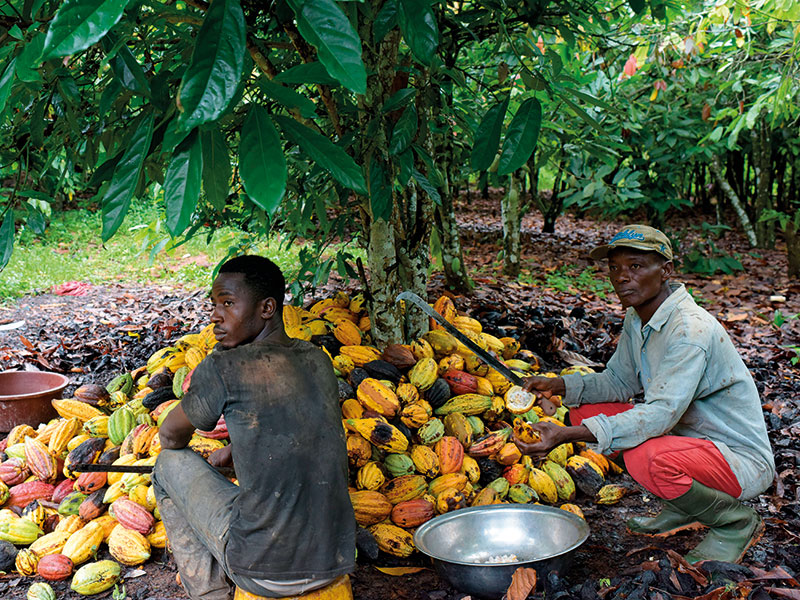
The Ghana Cocoa Board (COCOBOD) has indicated that it is piloting an irrigation system to serve cocoa farms affected in areas where illegal mining activities have destroyed water bodies.
According to the board, they are currently piloting the irrigation system on some hundred farmlands in the country.
The Public Affairs Manager of COCOBOD Fiifi Boafo made this known in an interview with Happy 98.9 FM’s Samuel Eshun, host of the Happy Morning Show.
“We have identified the importance of irrigation and have introduced irrigation on some cocoa farmlands. We are now at the piloting stage and we will fully roll it out soon”.
Explaining the call for the irrigation of cocoa farmlands, Fiifi added, “Because galamsey has destroyed water bodies in and around cocoa farmlands, we are now sinking boreholes to undertake the irrigation exercise. We have started with 100 farmers and more will benefit from it now. The work has been done across various platforms and that is what is currently going on in various cocoa growing regions”.
On the authority of the COCOBOD spokesperson, the irrigation system which is solar-powered serves 1 hector of the various farms on which it is being piloted.
Gold mining has always been a part of Ghana but in the last several years, however, largely unregulated galamsey mining resulted in contaminated water bodies which serve various communities.
In the Ashanti Region, the Enu River which serves residents at Konogo is polluted due to galamsey activities. In the Central Region, some water bodies specifically at Cape Coast have also been polluted as a result of the practice
Gold and cocoa are both integral parts of Ghana’s economy and national identity, yet the two resources’ coexistence has contradictions.
Several other factors have been blamed for the volatile nature of the cocoa market in Ghana, most notably climate change, which can usher in an extremely dry season one year and excessive rain the next.
By: Joel Sanco