





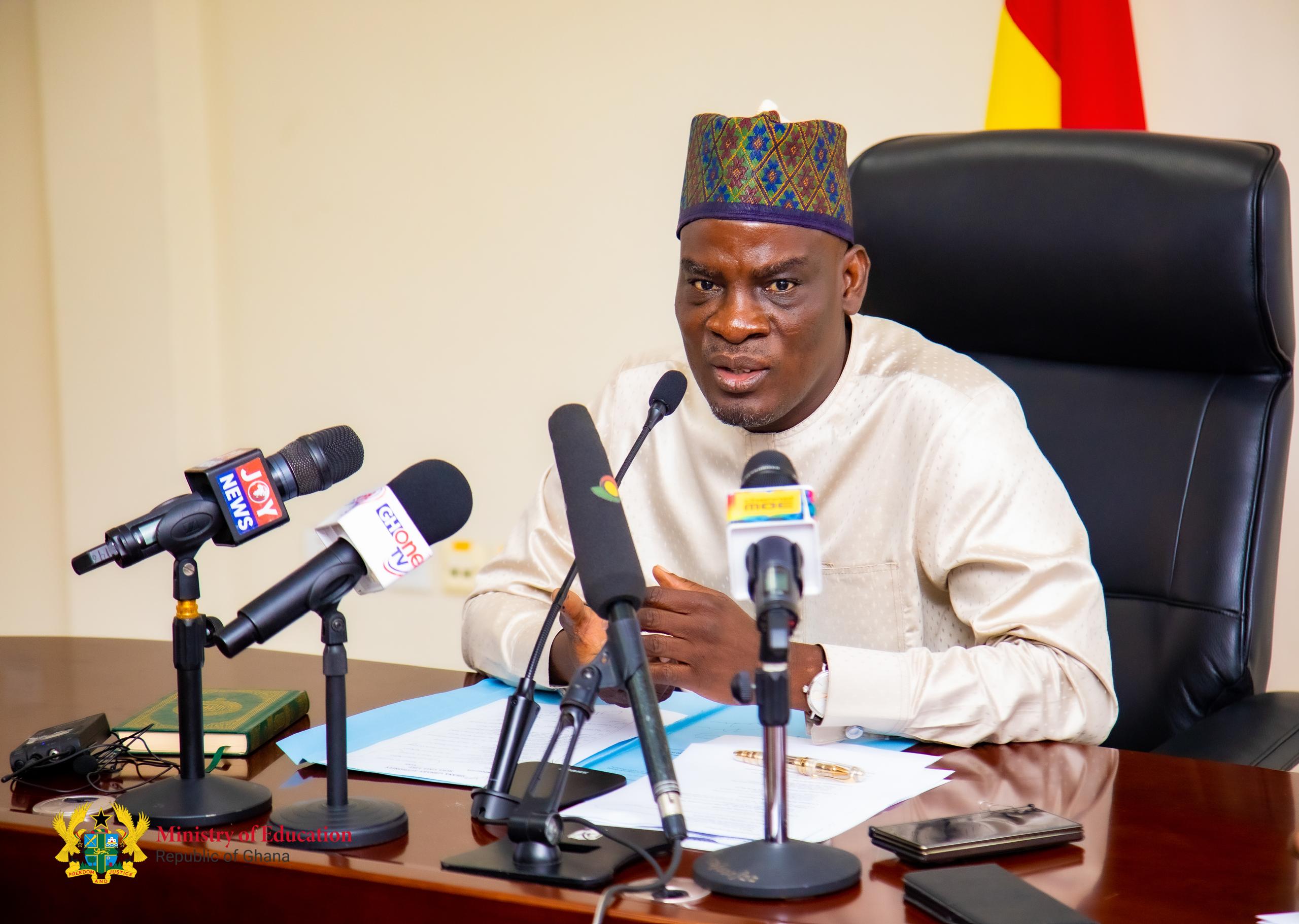
Minister of Education, Haruna Iddrisu, has called on management and administrators of technical universities to place greater emphasis on hands-on, practical skills in their academic programmes to better equip graduates for the job market.
He noted that while government is investing additional resources to reform Ghana’s education system, tertiary institutions must also collaborate closely with industry to design transformational curricula that will drive economic growth and improve living standards.
The minister made these remarks in a speech read on his behalf at the 22nd Congregation of Koforidua Technical University (KTU), held in Koforidua.
The address was delivered by the Deputy Director-General of the Ghana Education Service (GES), Professor Smile Dzisi.
Professor Dzisi explained that the government’s reset agenda seeks to make education not only accessible and inclusive but also relevant and impactful. He said the agenda prioritises the development of employable skills, the promotion of innovation and entrepreneurship, and the advancement of human capital to compete both locally and globally.
“It is expected that institutions of higher learning will work hand in hand with industry to lead discussions on transformational curricula needed to propel the country towards a stronger economy and improved standards of living. I challenge Koforidua Technical University, and all technical universities, to make employable skills and practical entrepreneurship central to their academic delivery.”
Addressing the graduating students, the Vice-Chancellor of KTU, Professor John Owusu, encouraged them to apply the practical knowledge and skills they have acquired to address real-life challenges within their communities.
“The problems of the world are opportunities waiting for your solutions. Your success, wealth, reputation, and recognition are embedded in the challenges around you, and it is by solving them that you unlock your potential.”
The ceremony, held under the theme “Technical Education for Innovation, Employability and Global Competitiveness,” saw a total of 3,011 students graduate from various programmes.