





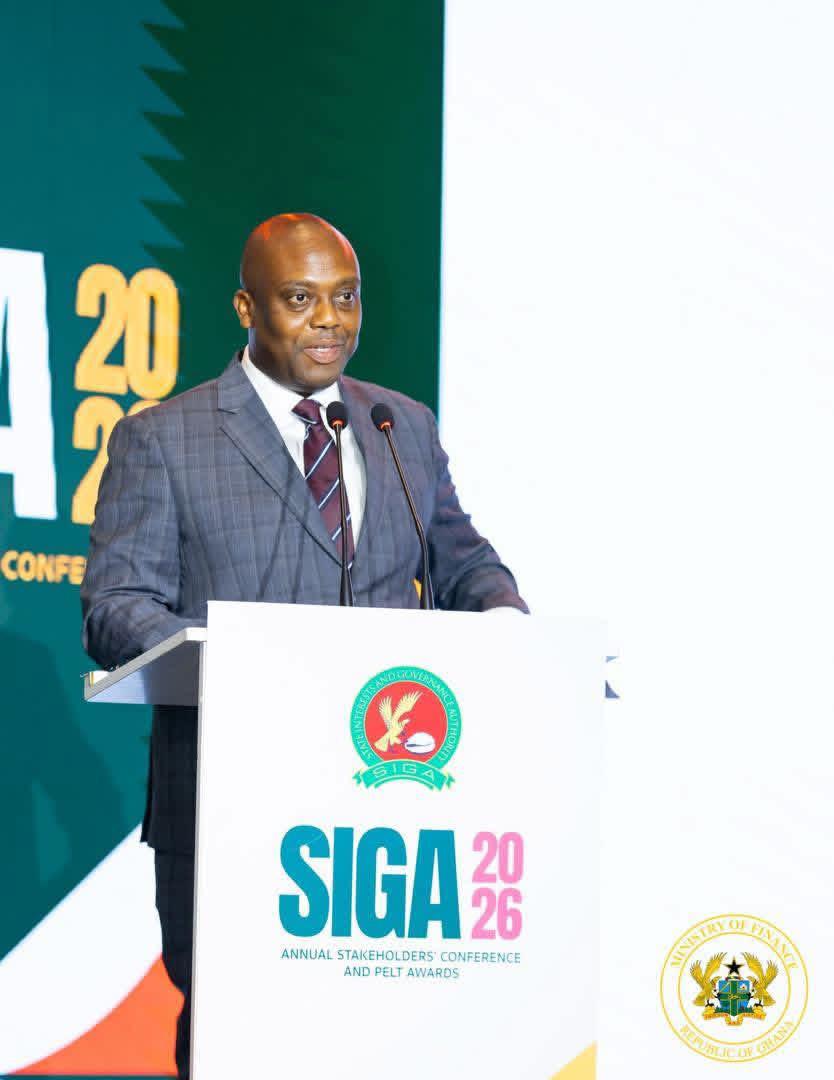
The Deputy Minister for Finance, Thomas Nyarko Ampem, has issued a strong warning to State-Owned Enterprises (SOEs) to improve performance or face dissolution as government intensifies efforts to promote efficiency and accountability in the public sector.
Delivering remarks on behalf of the Finance Minister, Cassiel Ato Forson, at a stakeholder meeting on SOEs and Specified Entities, Mr. Ampem stated that loss-making enterprises will no longer be tolerated under the government’s renewed push for reform.
The meeting was held under the theme “Leveraging Public Assets for Shared Prosperity.”
He indicated that the government has stabilized the economy and created a more favourable environment for public enterprises to operate, stressing that excuses for poor performance are no longer acceptable.
Reaffirming commitments made by President John Dramani Mahama, the Deputy Minister noted that under the ongoing economic reset agenda, underperforming SOEs will be restructured through reforms, mergers, privatisation, or outright closure, with strict attention to fiscal discipline, governance, and performance.
Mr. Ampem highlighted improvements in key macroeconomic indicators, including a significant decline in inflation from 23.8 percent in January 2025 to 3.3 percent in February 2026. He also pointed to increased currency stability and a reduction in the policy rate by the Bank of Ghana as signs of a more stable economic environment.
Despite these gains, he stressed that SOEs must transition from being a drain on public finances to becoming contributors to national revenue.
He expressed concern over persistent inefficiencies, particularly in the energy sector, revealing that government spent about $1.47 billion to address shortfalls.
The Electricity Company of Ghana continues to record losses of about 40 percent of power due to technical and commercial inefficiencies.
In the financial sector, the Deputy Minister disclosed that government injected over GH¢1 billion in 2025 to recapitalise the National Investment Bank and the Agricultural Development Bank, while also pursuing the conversion of Ghana Cocoa Board’s GH¢5.8 billion legacy debt into equity.
He cautioned that such interventions pose significant fiscal risks and cannot continue indefinitely.
Mr. Ampem, however, commended the Ghana Ports and Harbours Authority, Ghana Reinsurance Company Limited, and TDC Ghana Limited for improved dividend performance, noting that the three entities paid a combined GH¢329.34 million in 2025, up from GH¢28.7 million in 2024.
He noted that despite the progress, consistency and compliance remain major concerns across the sector.
The Deputy Minister further underscored the importance of strict adherence to reporting and governance standards under the State Interests and Governance Authority, warning that non-compliant entities will face sanctions. Boards and management teams, he added, will be held accountable for failures in oversight and execution.
He urged SOEs to operate with discipline, efficiency, and transparency, emphasizing that public enterprises must deliver value to citizens or risk being shut down.
The meeting brought together key government officials and stakeholders, including Vice President Jane Naana Opoku-Agyemang, to explore strategies for repositioning public enterprises to better support national development.