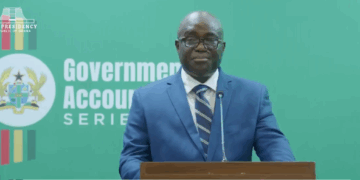







The Minister for Food and Agriculture, Eric Opoku, has warned that Ghana’s overreliance on imported food has placed the country in a precarious economic position, stressing the urgent need for accelerated agricultural transformation.
Speaking at the Government Accountability Series at the Presidency on Monday, November 24, Mr. Opoku said that by the time the National Democratic Congress (NDC) assumed office on 7th January, 2025, the nation’s food import bill had reached alarming levels.
He revealed that Ghana was spending about US$3 billion annually on basic food items including rice, poultry, vegetable oils, sugar and processed products, commodities he said could and should be produced locally.
According to him, the heavy dependence on imports not only drained the country’s foreign exchange reserves but also weakened national food self-sufficiency and exposed households to unpredictable global price shocks.
Mr. Opoku noted that Ghanaians had felt the impact of these vulnerabilities sharply in recent years, as food prices surged across the country.
Between 2022 and early 2025, he said, the cost of staple food items more than doubled in many urban markets, worsening hardship for ordinary citizens.
He described the period as one marked by severe inflationary pressure, citing the historic and unprecedented rise in food inflation, which peaked at 61% in January 2023 under the previous administration.
Although inflation saw marginal declines afterwards, he said it remained dangerously high, eroding purchasing power and significantly increasing the cost of living.
The Minister emphasized that these economic realities underscore the urgency of government’s ongoing agricultural transformation agenda, which aims to boost local production, reduce imports, stabilise prices and strengthen the country’s food security.