





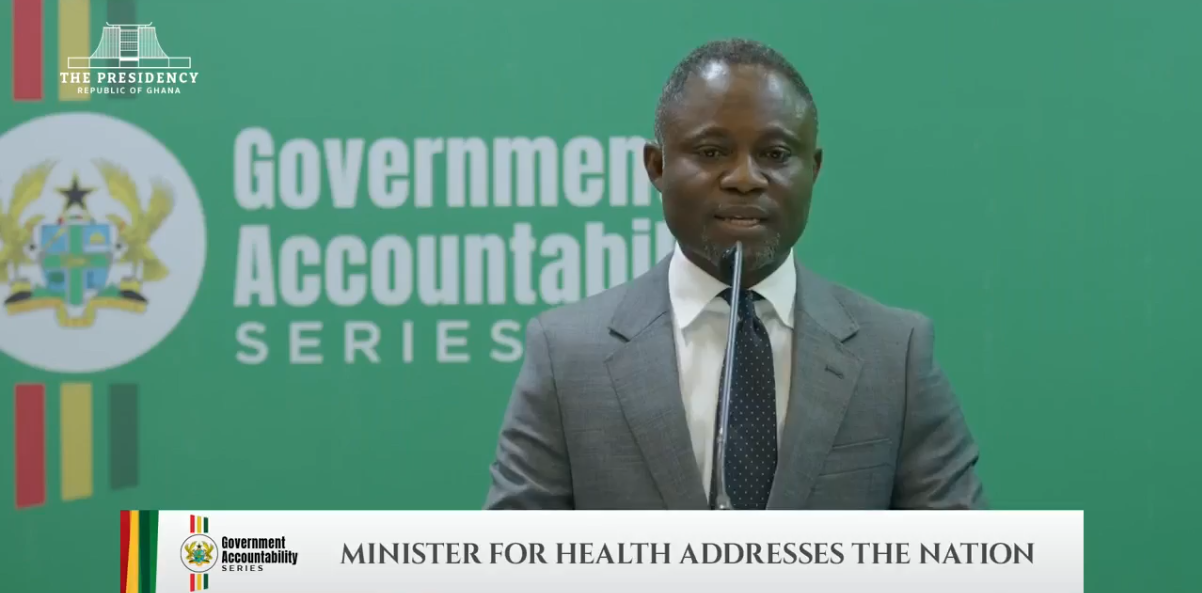
The Minister for Health, Kwabena Mintah Akandoh, has raised serious concerns over the cost and structure of Ghana’s contract with medical drone delivery company Zipline, describing key aspects of the deal as poor value for money and in need of urgent review.
Speaking at the Government Accountability Series on Monday, December 1, the Minister disclosed that the agreement, signed in 2018 and operational from 2019, contains “take or pay” clauses that compel Ghana to pay $88,000 per drone every month, regardless of the level of usage. With six drones currently in operation, the state is paying roughly half a million dollars monthly under the arrangement.
Akandoh explained that the original understanding was that the Zipline service would not be funded directly from government resources, but that model has since shifted, prompting questions about the true value of the contract.
He further revealed that an internal review of Zipline’s operations shows that only 12% of services are being used to reach hard-to-reach communities, and just 4% are dedicated to emergency deliveries. The rest, he noted, consists largely of non-critical supplies, including textbooks, school uniforms, and condoms, which were not the core justification presented when the project was introduced as an emergency health logistics intervention.
“These figures raise serious concerns about whether we are getting value for money,” the Minister said, adding that the nature of the “take or pay” clauses means the country continues to incur high costs even when utilization is low.
Akandoh confirmed that the government has held multiple meetings with Zipline to renegotiate the terms of the contract, with a focus on reducing costs and aligning the service more strictly with critical health needs and emergency response.
He stressed that while technology-driven solutions like drone delivery can play an important role in improving health access, contracts must be structured in a way that protects the public purse and reflects actual service usage.
The Minister assured Ghanaians that the government is committed to reviewing and adjusting the Zipline agreement to ensure it delivers genuine value for money and stays true to its original purpose of strengthening emergency healthcare delivery, especially in remote parts of the country.