






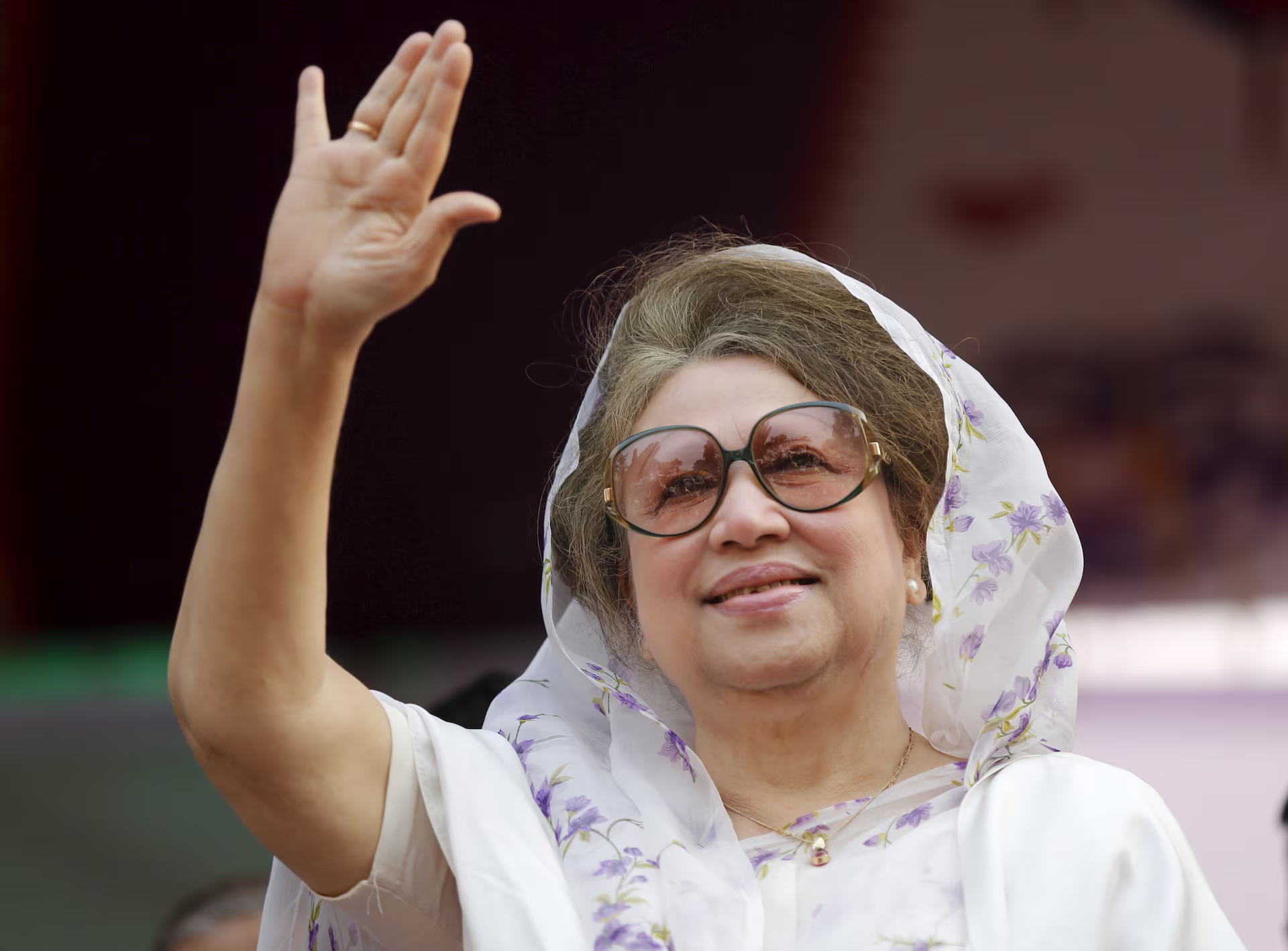
Khaleda Zia, Bangladesh’s first female prime minister and long-time political rival of former leader Sheikh Hasina, has died after a prolonged illness. She was 80.
Her death was announced early Tuesday by the Bangladesh Nationalist Party (BNP), which she led for decades. “Our favourite leader is no longer with us. She left us at 6am this morning,” the party said in a statement on Facebook.
Zia had been receiving treatment at Evercare Hospital in Dhaka, where physicians on Monday described her condition as “extremely critical.” Doctors said she had been placed on life support but could not undergo multiple treatments simultaneously due to her advanced age and poor overall health. Following news of her death, crowds gathered outside the hospital to mourn.
Zia had intended to contest the February general election, which would have been Bangladesh’s first national vote since a popular revolution in late 2024 forced Sheikh Hasina from power.
Born into relative obscurity, Khaleda Zia was thrust into national prominence after the assassination of her husband, President Ziaur Rahman, during a military coup in 1981. A reserved figure while serving as first lady, she entered politics after her husband’s death and rose rapidly through the ranks of the BNP.
She went on to make history in 1991 by becoming Bangladesh’s first female prime minister, leading the country after its first democratic elections in two decades. She later served additional terms, cementing her place as one of the most influential figures in Bangladesh’s political history.
Zia’s career was marked by a fierce and often personal rivalry with Sheikh Hasina, herself the daughter of Bangladesh’s founding leader, Sheikh Mujibur Rahman. The bitter feud between the two women defined the country’s politics for more than three decades and included periods of imprisonment and house arrest for Zia.
She was acquitted of corruption charges and allowed to travel to London for medical treatment only after Hasina lost power.
Widely regarded as an uncompromising and resilient leader, Zia earned respect for refusing to participate in elections held under military ruler General Hussain Muhammad Ershad in the 1980s. In doing so, she challenged entrenched military rule and broke through Bangladesh’s male-dominated political landscape.
Khaleda Zia leaves behind a complex legacy as a trailblazer, a polarising political figure, and one of the most formidable leaders in Bangladesh’s modern history.