




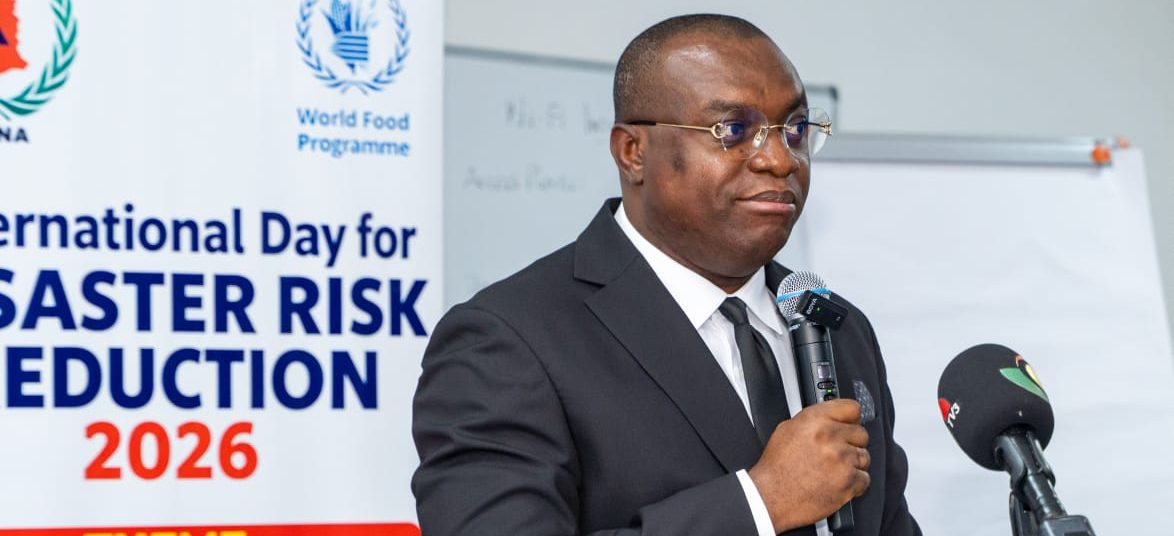
Presidential Adviser on National Resilience and Emergency Preparedness, Hon. Ernest Brogya Genfi, has called for a fundamental shift in Ghana’s approach to disaster management, urging greater investment in prevention, early warning systems and community preparedness to reduce the human and economic toll of recurring emergencies.
He said the country must move beyond responding to disasters after they occur and prioritise measures that address underlying vulnerabilities, protect livelihoods, and strengthen the capacity of communities to withstand emergencies.
Speaking at a high-level symposium commemorating the 2026 International Day for Disaster Risk Reduction, under the theme “Resilience Starts at Home,” Hon. Brogya Genfi identified eight priority areas for strengthening Ghana’s national resilience.
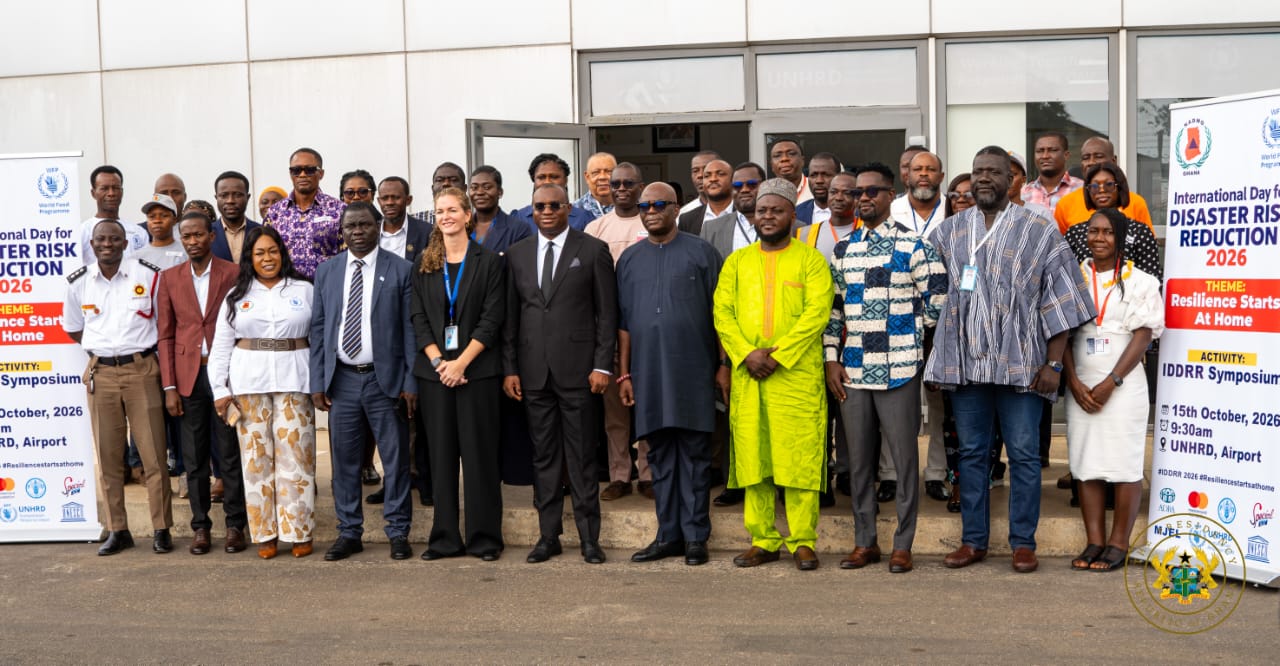
These include household preparedness, community-based early warning systems, urban flood risk management, market fire prevention, climate adaptation, protection for vulnerable groups, household-level disaster risk financing, and sustained public education and multi-stakeholder collaboration.
He argued that the recurring destruction caused by floods and fires demonstrates the need for a more deliberate, coordinated, and preventive approach to safeguarding lives, property, and economic activity.
“Preparedness is not a luxury; it is a necessity,” he said, emphasising that every household, community, and institution has a role to play in reducing disaster risks.
Hon. Brogya Genfi identified urban flooding as one of Ghana’s most persistent disaster risks, pointing to the widespread disruption caused by heavy rainfall in Accra on June 29, 2026, and flooding in Hohoe in the Volta Region.
The incidents, he said, highlight the need to strengthen drainage infrastructure, regularly desilt waterways, improve land-use planning, and enforce building regulations.
He maintained that investment in preventive infrastructure and better urban planning would help reduce the disruption to transportation, commerce, education, and other essential services that accompanies severe flooding.
“Reducing flood risk requires sustained investment in prevention rather than costly responses after disasters occur,” he said.
His proposed approach places emphasis on addressing the conditions that make communities vulnerable, rather than treating emergency response as the primary solution to recurring floods.
The Presidential Adviser also called for intensified efforts to prevent market fires, which continue to threaten traders, small business owners, and local economies.
Recent incidents in Kumasi and Accra, he noted, underscore the devastating consequences of fires that destroy merchandise, business premises, and the investments of people whose livelihoods depend on daily commercial activity.
He proposed regular electrical inspections, safer market layouts, improved firefighting infrastructure, public education, and stronger compliance with safety standards.
He said prevention must be the first line of defence against market fires, adding that protecting commercial centres was essential to safeguarding livelihoods and strengthening economic resilience.
The proposed interventions would require coordinated action by the relevant public institutions, market authorities, traders, and other stakeholders to improve safety and ensure that risks are identified and addressed before emergencies occur.
Hon. Brogya Genfi further stressed the importance of early warning systems that translate technical information into clear, practical guidance for people at risk.
He called for collaboration among local authorities, traditional leaders, community organisations, and the media to ensure that warnings reach affected populations in accessible formats and local languages.
He cited the need to reach market traders, fishing communities, and farming households with information they can act on before hazards escalate into disasters.
He also urged households to develop emergency plans, establish reliable emergency contact systems, understand evacuation procedures, and adopt basic safety practices.
According to him, national preparedness cannot depend exclusively on emergency agencies, as families and communities must be equipped to take appropriate action before professional assistance arrives.