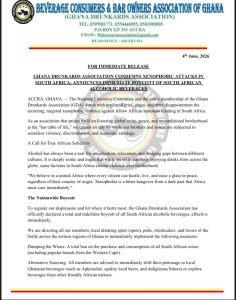




The Ghana Drunkards Association (GDA) has announced an indefinite nationwide boycott of all South African alcoholic beverages in protest against what it describes as recurring xenophobic attacks against foreign nationals living in South Africa.
In a statement signed by GDA President, Moses Onyah, on Thursday, June 4, the association expressed grief, anger, and disappointment over the continued violence, discrimination, and economic sabotage targeting fellow Africans in South Africa.
The association said it could not remain silent while African nationals are subjected to what it termed senseless acts of xenophobia.
The GDA emphasized its commitment to promoting peace, unity, and brotherhood among people from different backgrounds, noting that alcohol has traditionally served as a tool for socialization and cultural integration across nations.
The association stated that it believes in a united Africa where citizens can live, work, and coexist peacefully regardless of their country of origin.
It described xenophobia as a lingering challenge that must be addressed urgently across the continent.
As part of the boycott, the GDA has directed its members, drinking spots, pubs, wholesalers, and beverage consumers across Ghana’s sixteen regions to immediately stop purchasing and consuming South African wines and other alcoholic products.
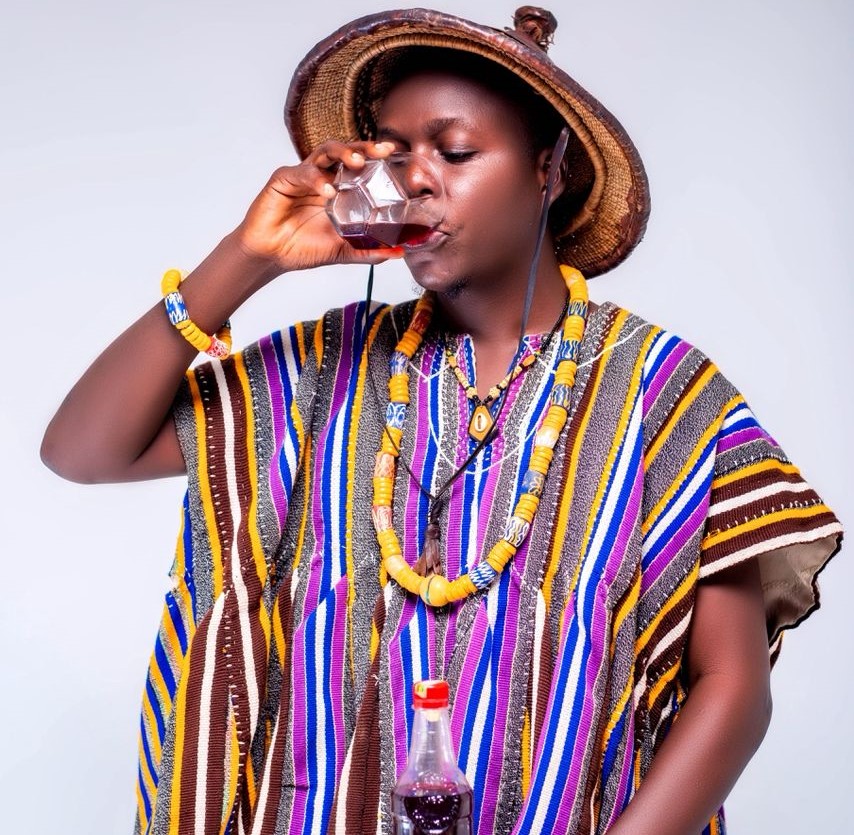
The association further encouraged members to patronize locally produced beverages, including akpeteshie, local beers, and indigenous bitters, while also considering products from other African countries.
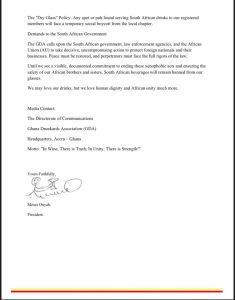
In addition, the GDA announced the introduction of a “Dry Glass” policy under which any drinking spot or pub found serving South African beverages to registered members could face a temporary social boycott by the association’s local chapters.
The association also called on the South African government, law enforcement agencies, and the African Union to take decisive action to protect foreign nationals and their businesses. It stressed the need for the restoration of peace and the prosecution of individuals responsible for xenophobic attacks.
The GDA maintained that South African beverages would remain banned from its members’ consumption until there is clear evidence of sustained efforts to end xenophobic violence and guarantee the safety of African nationals residing in South Africa.
“We may love our drinks, but we love human dignity and African unity much more,” the statement said.