





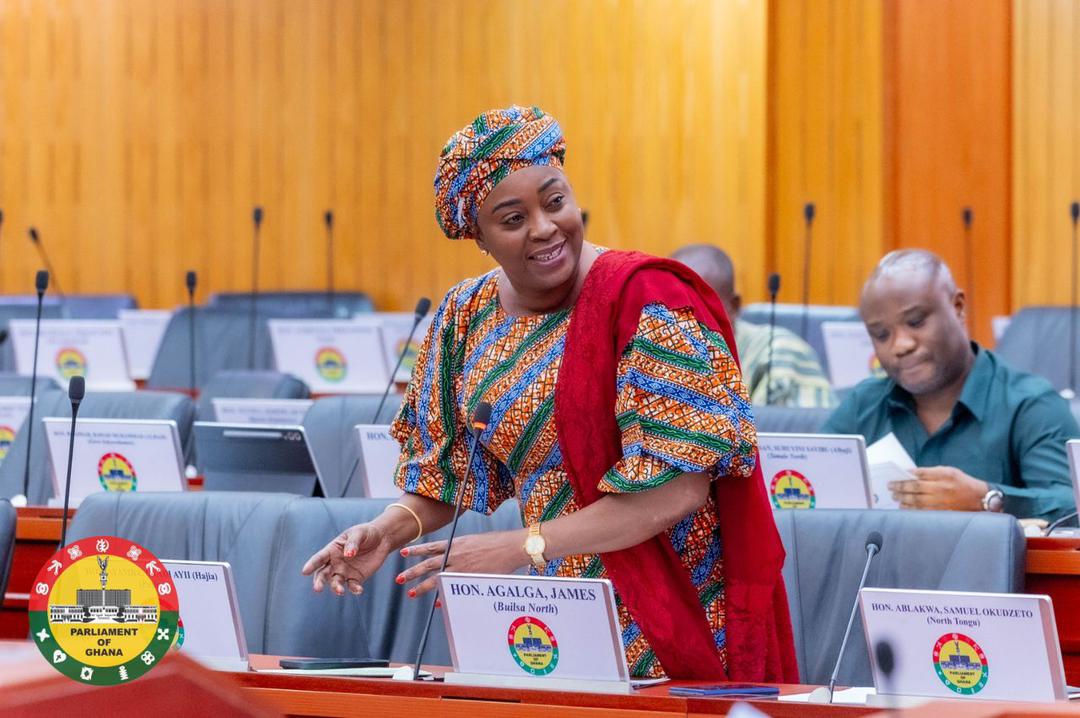
The Member of Parliament for Kintampo South, Felicia Adjei, has urged Ghana to begin a national dialogue on adopting the Proportional Representation (PR) electoral system, saying it could help improve gender equity and inclusiveness in the country’s governance structure.
Speaking on the floor of Parliament, the lawmaker explained that Proportional Representation is widely used in many democratic countries as a more balanced way of converting votes into parliamentary seats.
She emphasized that the system allows every vote to count toward representation, giving smaller political parties and minority groups a fair opportunity to participate in governance.
She noted that under the PR system, a political party that secures about 30 percent of the national vote would receive a similar proportion of seats in Parliament.
Such a system, she said, strengthens democratic participation by ensuring that fewer votes are wasted.
Mrs. Adjei pointed out that several African countries, including South Africa, Namibia, Rwanda and Senegal, have adopted proportional systems to promote broader political inclusion.
She highlighted Rwanda as a notable example, explaining that the system has contributed to women occupying more than 60 percent of parliamentary seats, making the country one of the most gender-balanced legislatures in the world.
The MP contrasted the PR system with Ghana’s current electoral model, the First-Past-The-Post system, where the candidate with the highest number of votes in a constituency wins the seat, even without an absolute majority.
While she acknowledged that the system is simple and straightforward, she argued that it often leaves many votes unrepresented and can limit opportunities for women and minority groups.
Mrs. Adjei also referenced the Affirmative Action (Gender Equity) Act, 2024, describing it as a major step toward increasing women’s participation in governance. However, she cautioned that legislation alone may not fully achieve gender equity if the electoral framework does not encourage inclusive representation.
As part of proposed reforms, she recommended the introduction of gender-balanced or “Zebra” lists, where political parties alternate between male and female candidates when allocating seats.
She explained that such an arrangement would promote fairness in representation.
The MP further suggested that Ghana could adopt a hybrid electoral system similar to those used in Germany and New Zealand. In such systems, some Members of Parliament are elected directly from constituencies, while others are selected from party lists based on the proportion of votes received nationwide.
According to her, this model would preserve constituency representation while also improving fairness and inclusiveness in Parliament.
Mrs. Adjei stressed that promoting gender equity is not only a matter of fairness but also essential for effective governance. She added that while the Affirmative Action Act has laid an important foundation, further electoral reforms could help Ghana build a more representative and inclusive Parliament.