






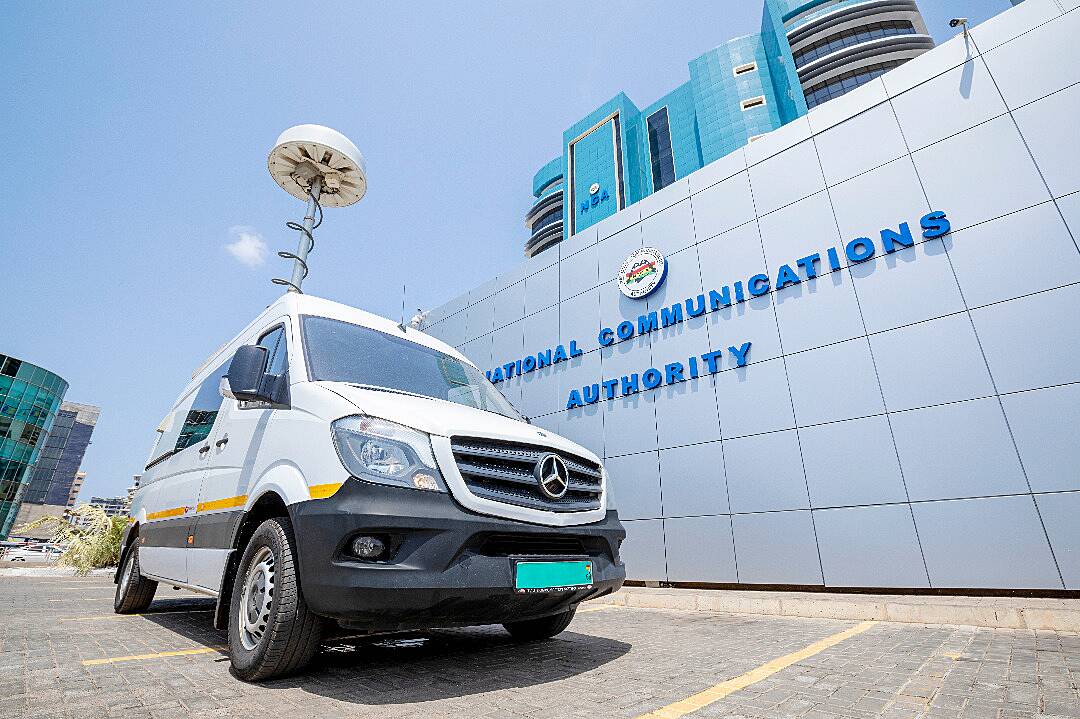
All mobile network operators in Ghana have been directed to extend network coverage to every constituent town within each Metropolitan, Municipal and District Assembly (MMDA), following sweeping new directives issued by the National Communications Authority (NCA).
The expanded coverage requirement forms part of a comprehensive overhaul of Quality of Service (QoS) standards announced on February 15, 2026, with immediate effect.
The revised framework significantly tightens Key Performance Indicators (KPIs) for telecom operators, replacing benchmarks that have been in place since 2004.
Under the previous regime, operators were encouraged, but not legally bound to expand services beyond district capitals.
The new directive makes coverage extension to all towns within every MMDA mandatory and enforceable under operators’ licence conditions.
In addition to widening coverage, telecom companies must now comply with stricter performance standards.
The maximum allowable Call Drop Rate (CDR) has been reduced from 3 per cent to below 1 per cent. Operators are also required to maintain a Call Connection Success Rate (CCSR) of above 95 per cent, with successful connections recorded in more than 90 per cent of operational cells within each MMDA.
Voice service quality has also been enhanced. A minimum average Mean Opinion Score (MOS) of above 3.0 has been set for 2G services to ensure clearer and more reliable calls.
Data service benchmarks have been significantly raised. Mobile network operators must now provide average 3G download speeds exceeding 1 megabit per second (Mbps), replacing the previous minimum requirement of 256 kilobits per second effectively quadrupling the standard.
Messaging services have not been left out of the reforms. Providers are now required to guarantee at least a 98 per cent SMS and MMS delivery success rate, with delivery times not exceeding five seconds.
The NCA indicated that it will intensify compliance monitoring through field measurements and performance assessments nationwide.
Operators that fail to meet the new standards risk sanctions in accordance with their licence conditions and applicable laws.
The regulator further urged consumers experiencing persistent poor service to formally lodge complaints, noting that the reforms reflect evolving technology, changing usage patterns, and national policy objectives aimed at improving service delivery across Ghana’s telecommunications sector.