




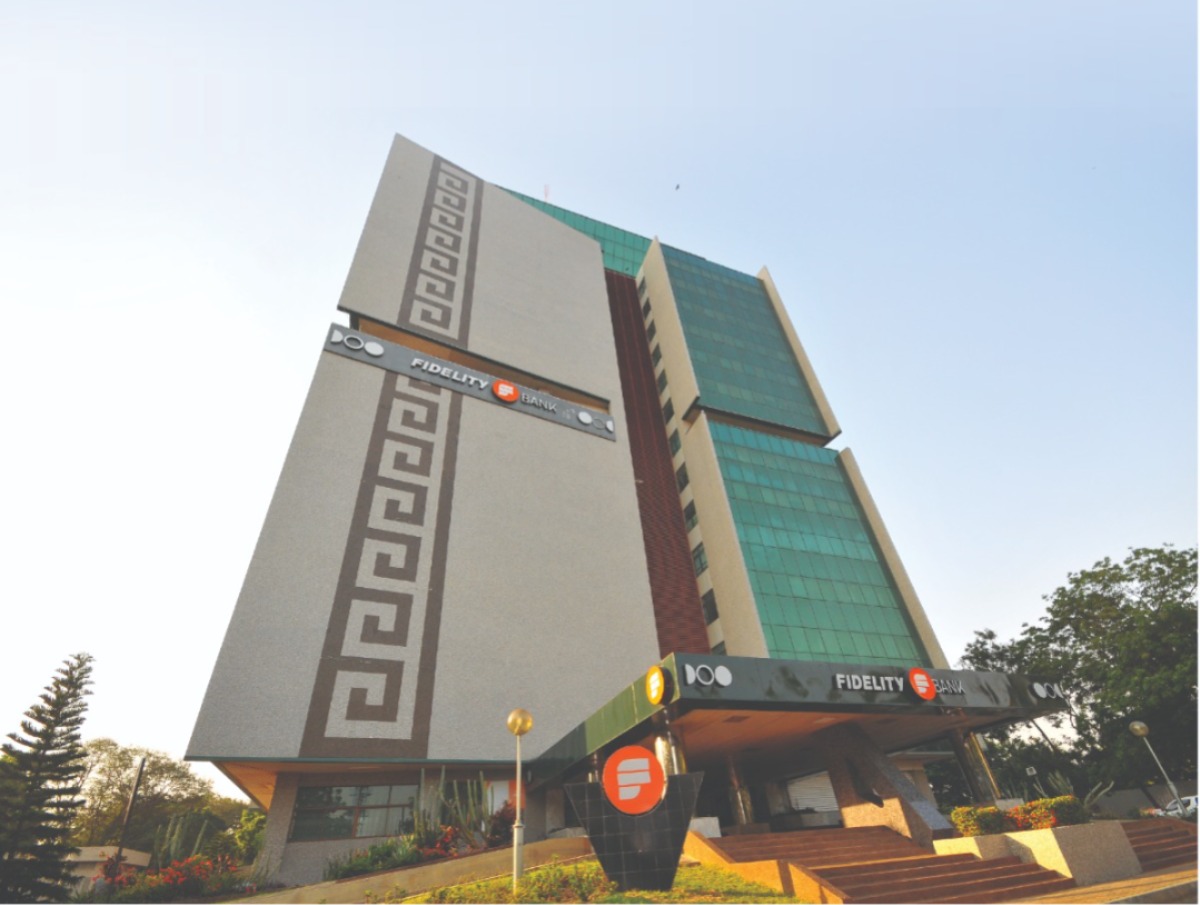
Palm oil is in almost everything Ghanaians eat, yet the country imports more than it produces. A new report from Fidelity Bank’s Research and Market Insights Unit breaks down a structural problem that has been building for years.
The oil that runs everything
There is a product in your kitchen, your soap, your biscuits, your margarine, and quite possibly your fuel, that most people never think about. Palm oil is the most consumed vegetable oil in the world, producing 79.6 million metric tonnes annually, more than soybean, rapeseed, and sunflower oil combined. It overtook soybean oil as the global leader in 2006 and has not looked back since.
Ghana knows this crop well. The oil palm tree is native to West Africa. The country has the land, the climate, and the farming history to be a serious producer. Yet today, Ghana imports significantly more palm oil than it exports, spending GHS 1.06 billion more on imports than it earns from exports as of 2025. That trade deficit has grown by 503% compared to 2024 alone.
This is the central finding of Fidelity Bank Ghana’s latest research report: Ghana’s Oil Palm Trade 2018 to 2025. And the numbers tell a story that goes far beyond trade statistics.
A continent that cannot feed its own demand
The problem is not unique to Ghana. Africa as a whole consumes 9.9 million metric tonnes of palm oil annually but produces only 3.5 million, leaving a production deficit of 6.4 million metric tonnes.
That gap is being filled almost entirely by imports from Asia, primarily Malaysia and Indonesia, the two countries that now control roughly 86% of global palm oil production.
For Ghana specifically, Malaysia supplies 59% of all palm oil imports. Liberia accounts for 22%, Indonesia another 7%. The country’s exports, by contrast, flow mostly to Nigeria and Senegal, regional neighbours who are themselves trying to close their own supply gaps.
The picture that emerges is of a country positioned squarely in the middle of a continental food dependency, buying a product it has every natural condition to produce, from countries thousands of kilometres away.
The gap between potential and reality
What makes this particularly striking is the scale of what Ghana is not using. The country has 4.7 million hectares of arable land suitable for oil palm cultivation. Currently, only 0.4 million hectares are under harvest. That means roughly 91% of Ghana’s potential oil palm land sits idle or underutilised.
Domestic production stands at around 300,000 metric tonnes annually. Domestic consumption is approximately 350,000 metric tonnes. Ghana is not even producing enough to feed its own market, let alone generate meaningful export volumes.
The report identifies the core bottleneck clearly: raw material scarcity driven by low yields, ageing trees, and a fragmented smallholder supply chain. Many of Ghana’s oil palm farms are run by smallholder farmers working with older tree stock, limited access to quality seedlings and fertiliser, and roads that make it difficult to get fresh fruit to processing mills before quality degrades. The result is extraction rates that fall well below what the land and the crop are capable of delivering.
A market shaped by prices it cannot control
There is another layer to this problem that affects every Ghanaian who buys cooking oil. Because Ghana sources the majority of its palm oil from Asia, its cost structure is almost entirely determined by global commodity prices and international freight rates. When global palm oil prices surged in 2021, Ghana felt it immediately. Import values hit GHS 2,092 million that year, up sharply from GHS 888.9 million in 2018.
The country has limited ability to buffer itself against these swings because domestic supply cannot be scaled up quickly enough to respond. When external prices rise, Ghanaian consumers pay more. When freight costs increase, the gap widens further. The vulnerability is structural, not incidental.
Where the opportunity sits
The report is not pessimistic. It is honest about the problem, but it also maps the opportunity clearly.
Ghana is not going to out-compete Malaysia or Indonesia on price. Those countries have decades of industrial infrastructure, government support, and economies of scale that are not easily replicated. That is not where Ghana’s advantage lies.
The real opportunity is in value addition and regional proximity. Africa’s demand for palm oil is growing. Countries across the continent are net importers. Under the African Continental Free Trade Area agreement, Ghana has a geographical and logistical advantage over Asian suppliers for those markets. The question is whether the country can build the processing and export infrastructure to take that position seriously.
Funding momentum is beginning to align. Development Bank Ghana has committed $500 million to support the agricultural sector, and development finance institutions are increasingly directing resources toward plantation expansion, outgrower schemes, and refinery upgrades.
The policy framework, through the National Policy on Integrated Oil Palm Development covering 2026 to 2032, is in place. What is needed now is implementation with legal backing, clear institutional roles, and consistent follow-through.
Research cited in the report suggests Ghana could more than double its national output simply by closing yield gaps on existing farms through better management practices. That does not require new land. It requires better inputs, stronger technical support for farmers, and a financing model that treats the value chain as a whole rather than lending to individual farmers in isolation.
What this means for Ghana
Palm oil is not a niche agricultural commodity. It is embedded in the daily life of virtually every Ghanaian household. The fact that Ghana imports the majority of it, at a deficit that has grown fivefold in a single year, is a signal that deserves serious attention from policymakers, financiers, and the private sector alike.
The land is there. The demand is there. The regional market is waiting.
The gap is not in potential. It is in structure, investment, and urgency.
This article draws on findings from Ghana’s Oil Palm Trade 2018 to 2025, published by the Research and Market Insights Unit of Fidelity Bank Ghana. To access the full report download it here: