





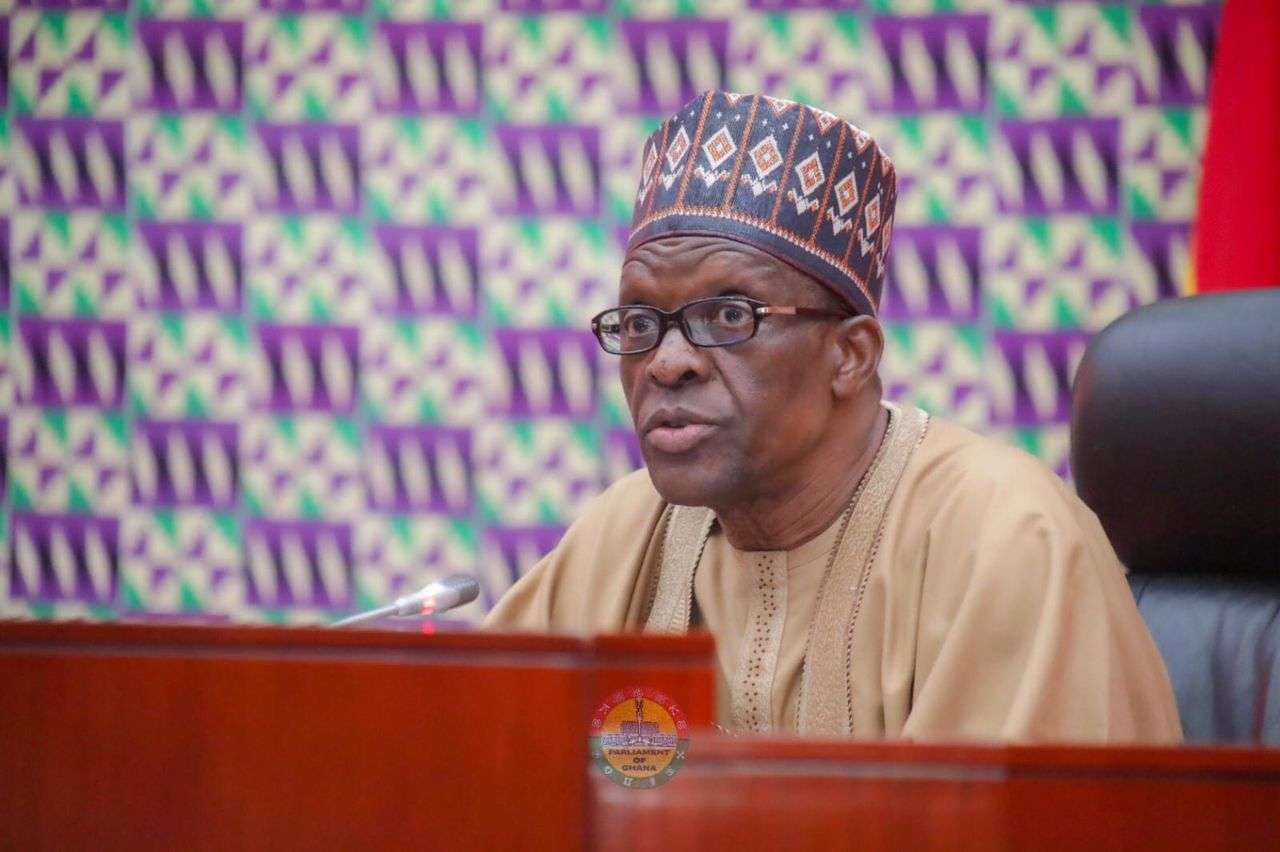
Speaker of Parliament, Alban Bagbin, has raised concern over the increasing monetization of politics in Africa, warning that the high cost of political campaigns is driving corruption and undermining governance across the continent.
Speaking at the 9th Biennial Conference of the African Parliamentarians Network Against Corruption (APNAC) held at the Alisa Hotel in Accra, on Friday, November 7, 2025, Mr. Bagbin disclosed that in some African countries, individuals spend as much as $100 million to become president and up to $500,000 to win a parliamentary seat.
He questioned how politicians are expected to recoup such colossal investments once in office, stressing that this financial burden has become one of the key catalysts of corruption in governance.
“Where does one get such colossal amounts from, and upon assuming office, how does one recoup such lavish investment?” he queried.
Alban Bagbin noted that the growing link between money and politics has resulted in “an explosion of corruption” and the erosion of societal values.
He described corruption as a multifaceted, ever-changing menace that has adapted to new technologies and infiltrated nearly every aspect of governance and economic life.
“Corruption today has the proclivity to mimic scientific innovations and information technology. It is in league with organized crime, money laundering, drug trade, human trafficking, wildlife crimes, extractives, and even sextortion,” Mr. Bagbin said.
He emphasized that the situation has become “systemic, cancerous, and cataclysmic,” warning that if unchecked, corruption could destroy the moral fabric of African societies.
Citing findings from Ghana’s Cyber Security Authority, he revealed that Ghana lost GH₵23.3 million in 2024 and GH₵14.9 million in the first half of 2025 to cybercrime, describing it as the “new kid on the corruption block.”
Mr. Bagbin further criticized what he described as a “biased global approach” to anti-corruption assessments, questioning why organizations like Transparency International often target African countries while ignoring foreign jurisdictions that harbor illicit funds.
“Corruption involves two or more parties. If the illicit money is being saved in your country, you are as corrupt as the one bringing it,” he stated.
The Speaker called for a renewed and united front among African legislators under APNAC to confront emerging forms of corruption, strengthen oversight institutions, and restore integrity in public life.
He emphasized that Africa stands at “a defining moment” in the fight against corruption and urged political leaders to lead by example, saying the continent’s progress depends on its ability to overcome the scourge of corruption and the monetization of politics.