



There was a version of Zinabu Issah’s life her own family wanted for her: behind a market stall, selling whatever she could, doing what they understood to be real work.
For years, that was the argument put to her every time she chose training over trading. Football was the only sport Issah knew existed. A woman in a wheelchair throwing a shot Put for a living was not something anyone around her had a name for, let alone a belief in.
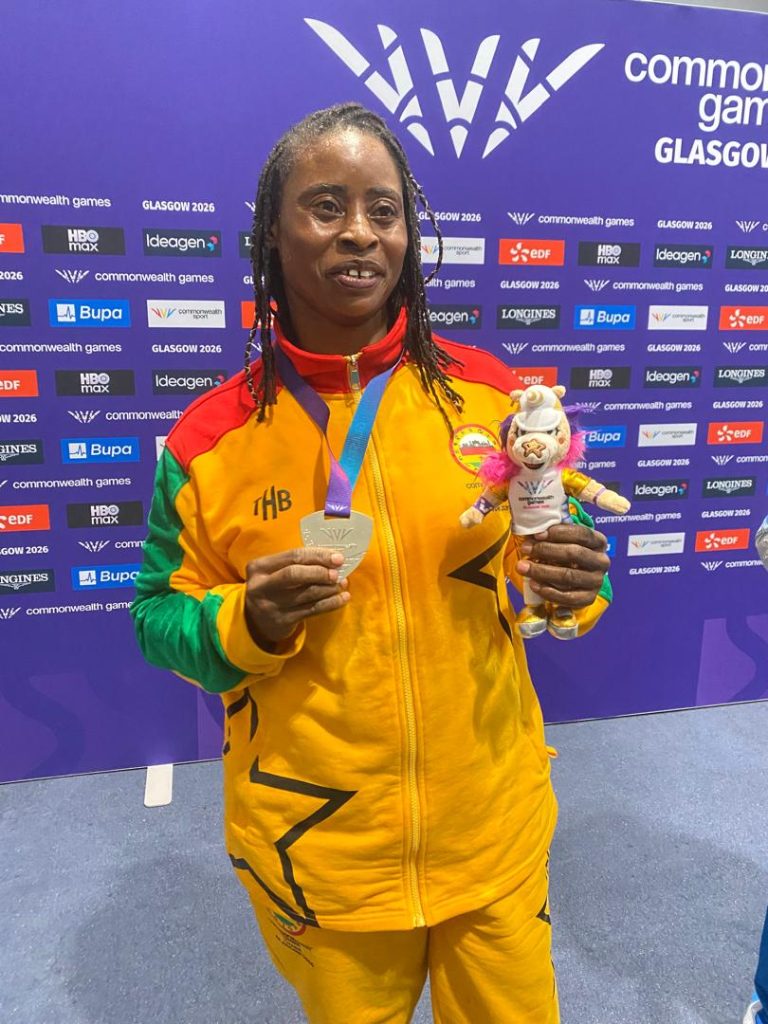
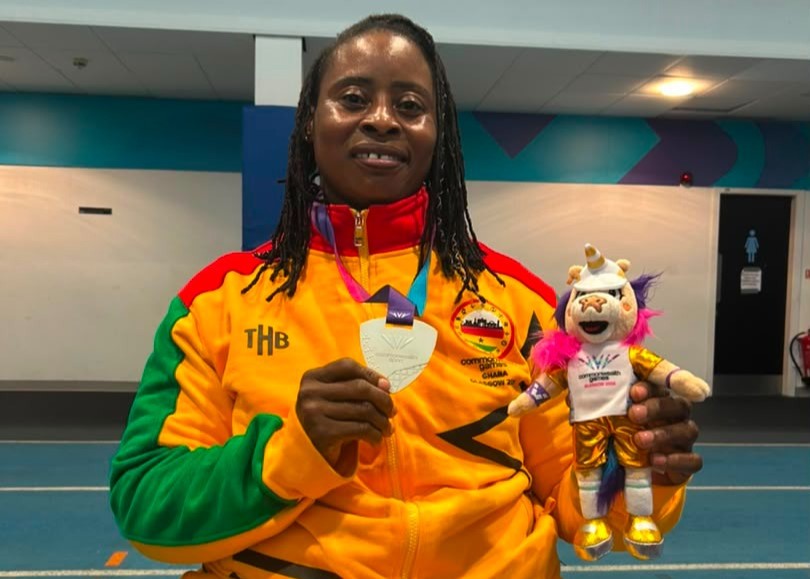
On Monday, inside Glasgow’s Scotstoun Arena, she gave them an answer 8.65 meters long.
That season-best throw won silver in the Women’s Wheelchair Shot Put F57 final and delivered Ghana’s first medal of the 2026 Glasgow Commonwealth Games, the country’s opening moment on a medal table that had, until then, stayed blank.
It is tempting to call it a breakthrough. It is not. Issah has been doing this for years, quietly, far from the attention a Commonwealth Games brings. She competed in Tokyo in 2021 and again in Paris in 2024. She won gold in the Discus Throw in 2025 and was named Ghana’s best Para Athlete that year. Weeks before Glasgow, she took silver at the World Para Athletics Grand Prix in Dubai.
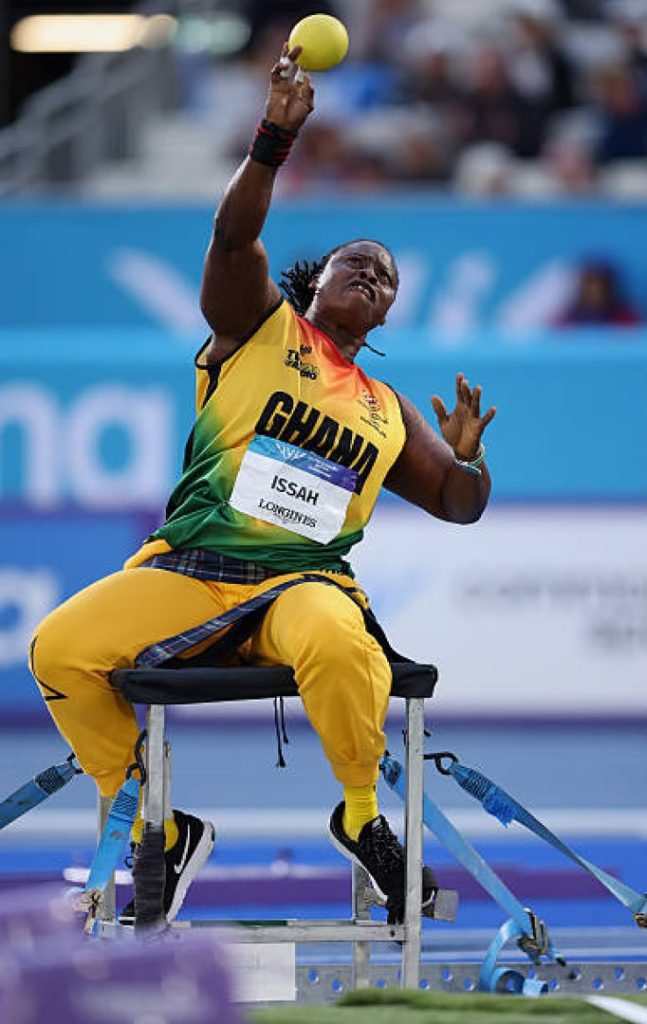
What changed on Monday was not her ability. It was who was watching. Her family’s doubt, by her own account, never really left, even as the results piled up.
What did change things, she says, was her coach, Emmanuel Anum Sowah, who has trained her since her earliest years in the sport and who she credits with everything that has followed. Where others saw a woman giving up a stable income for something with no guaranteed return, he saw an athlete worth building. He kept telling her she could do it, she says, long after that belief looked unreasonable to everyone else.
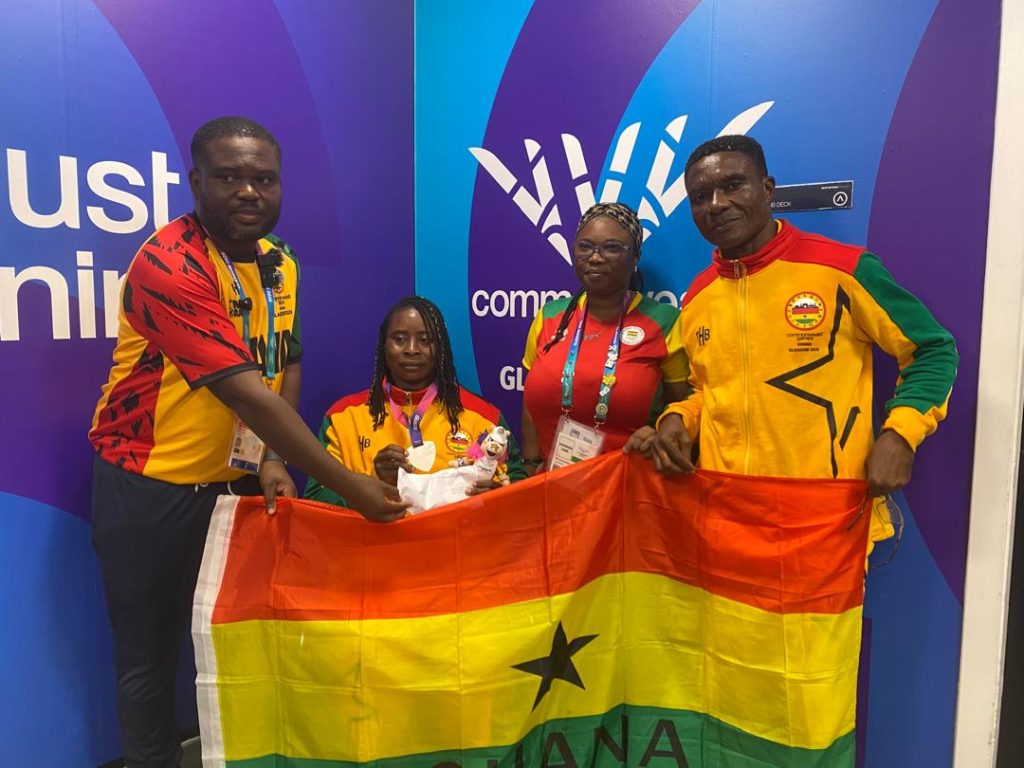
Speaking after the final, medal now around her neck, Issah gave thanks to God, to the Ghana Olympic Committee and to the people of Ghana who had willed her on from home.
But it was her coach’s name she returned to. What she has built, she says, traces back to a man who refused to let her give up on herself when the people who loved her told her to.
The same relatives who once pushed her towards the market are now, by her account, the ones celebrating loudest at home. It is a smaller reversal than a medal, but for Issah it may be the more meaningful one.
Doubt, once it is proven wrong often enough, tends to turn into pride.
She is not finished. Issah has already qualified for the 2028 Olympic Games, and Monday has only sharpened what she wants there. Silver in 2026 Glasgow, on her account, is a step. Gold is the destination.
Her medal also lands inside a Commonwealth Games unlike any that have come before it. Glasgow stepped in as host only in late 2024, after Victoria in Australia withdrew over cost, giving organizers barely eighteen months to build a pared-down edition from scratch.
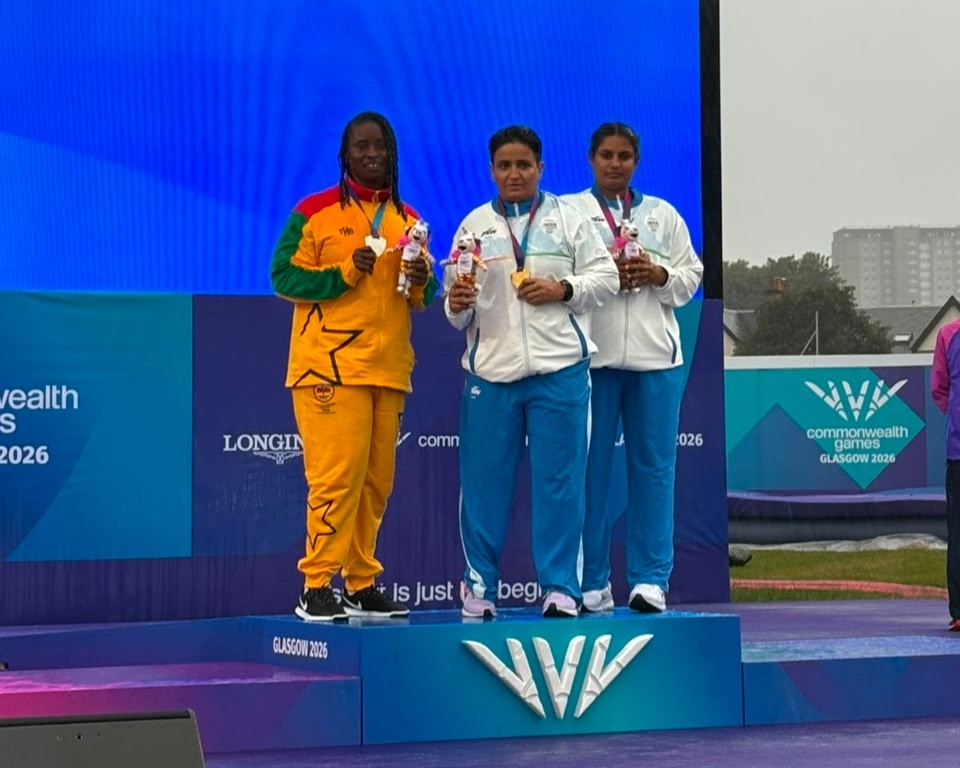
Roughly 3,000 athletes from 74 nations and territories are competing across ten sports and 215 medal events, the smallest programme since 1994 but also the one with the deepest Para-sport presence in the Commonwealth Games’ 96-year history: 47 medal events across six fully integrated sports.
The Games began life in 1930 as the British Empire Games, and Glasgow itself last hosted in 2014. This is a leaner Commonwealth Games than that one. It is also, on the evidence of Monday, one already producing the kind of story it was built to tell.
Ghana Paralympic Committee president Samson Deen has fulfilled his promise to Zinabu a £2,000 bonus in recognition of the medal, on top of statutory prize money from Ghana’s Ministry of Sports and Recreation.
The cheques matter less than what they represent: a country beginning to put money and attention behind athletes it once had none for.
For a woman once told that sport had no future for her, the silver hanging around her neck in Glasgow says otherwise. And on her own account, she is not done yet.
By: Prince Obiba Ayim Brown – Glasgow, Scotland