



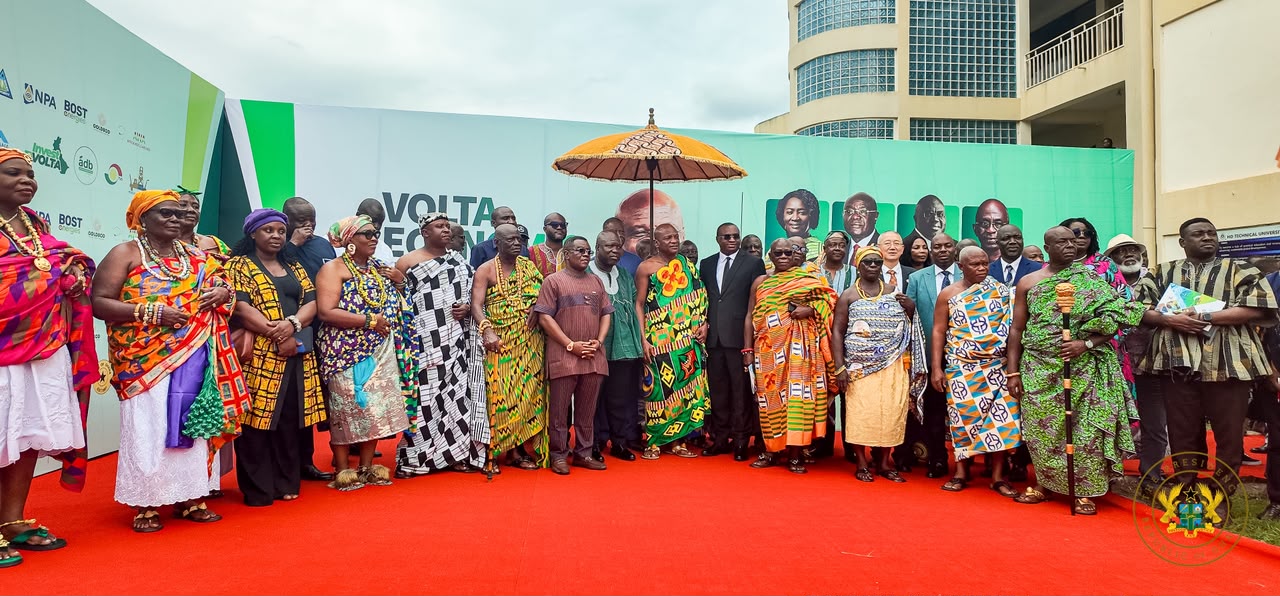
The government has challenged stakeholders participating in the Volta Economic Forum to measure the success of the gathering by the investments, projects, and jobs that emerge from it rather than the number of opportunities showcased.
Presidential Adviser on National Resilience and Emergency Preparedness, Hon. Ernest Brogya Genfi, delivering a speech on behalf of the Chief of Staff, Hon. Julius Debrah, at the 2026 Asohli Teza Edition of the Forum in Ho, said the Volta Region must now move decisively from identifying its economic potential to creating the conditions required for investment execution.
The forum, held under the theme “From Opportunity Showcase to Investment Execution,” brought together investors, business leaders, entrepreneurs, project promoters, traditional authorities, development institutions, and other stakeholders.
Brogya Genfi said the region had already demonstrated significant economic potential through its land, lake, coastline, cultural assets, and human capital. The priority, he said, was now to convert those assets into productive economic activity. “What Volta needs now is the discipline to turn those assets into viable businesses, better incomes, and decent jobs,” he said.
The Presidential Adviser said a successful investment forum should leave behind measurable commitments and projects after the event. “A successful forum should still be visible after the banners have come down,” he said.
Brogya Genfi also called for the establishment of a short, prioritised pipeline of investment-ready projects emerging from the forum. Each project, he said, should have a clearly identified lead, financing requirement, next decision, and follow-up timeline, while a dedicated team should track progress and regularly report on commitments.
Brogya Genfi emphasised that investment execution would require shared responsibility among government, financial institutions, traditional authorities, and the private sector.
He indicated that the government must provide stable policy, enabling infrastructure and timely decisions, while financial institutions should develop financing instruments suited to sectors such as agriculture, tourism, manufacturing, and growing local enterprises.
Traditional authorities, he added, have an important role in land access, community confidence, and the long-term protection of investments, with the private sector bringing in capital, management expertise, and market discipline. “When each party does its part, good projects have a genuine chance to succeed,” he said.
Brogya Genfi said major investments should create opportunities for farmers, artisans, transport operators, suppliers, and young professionals, while women-led businesses and young entrepreneurs should have fair access to procurement, training and finance.
“Development becomes real when families can trace it to a job, a reliable market, or a stronger local business,” he said.
He illustrated the point by referring to farmers in South Tongu who need dependable buyers, young entrepreneurs in Ho seeking to expand, and fishermen around the Volta Lake, who require facilities such as cold storage.
He made a direct call for measurable outcomes from the forum and urged stakeholders to ensure that by the time the next festival is held, the region can point to concrete investment results. “Let us be ready to count signed deals, capital mobilised, projects under construction, and people put to work,” he said.
He said the Volta Region had spent enough time being described as a place of promise and urged stakeholders to use the forum to convert that promise into visible economic progress.
The call comes against the backdrop of ongoing efforts to advance the Volta Economic Corridor, which Government has described as a national project intended to strengthen agriculture, industry, transport, employment and trade around the Volta Lake.
For Brogya Genfi, the message of the 2026 Forum is, therefore, not simply about attracting attention to opportunities in the region but ensuring that identified opportunities are sufficiently prepared, financed, and followed through to implementation.