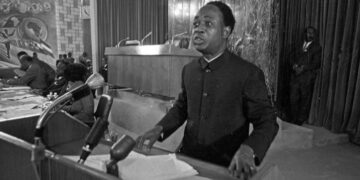




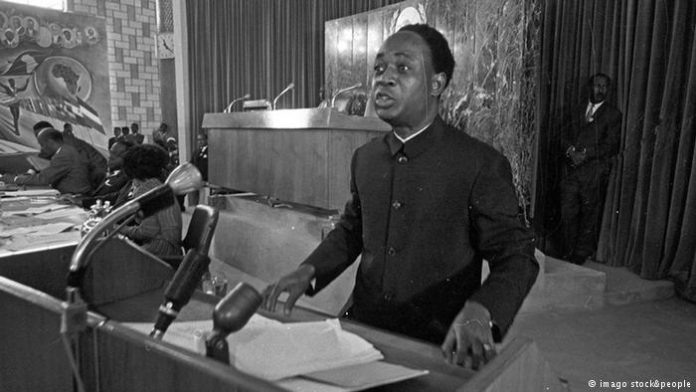
The Convention People’s Party (CPP) has marked the 60th anniversary of the February 24, 1966 coup with a strong call for rebirth, reconciliation and reorganisation, describing the overthrow of Ghana’s first republic as a tragic turning point in the nation’s history.
In a statement issued on Tuesday, February 24, 2026, and signed by its General Secretary, Comrade Kwame Nkrumah Botsio, Esq., the party said the day evokes memories of how Ghana “lost her way to glory” following the coup that removed Osagyefo Dr. Kwame Nkrumah from office.
According to the CPP, Ghana’s founding fathers, led by Dr. Nkrumah, pursued both political and economic independence.
While political independence was achieved on March 6, 1957, the party noted that economic independence, intended to free Ghana from reliance on foreign loans and grants was being pursued through an ambitious industrialisation agenda before it was cut short.
The statement claimed that under Dr. Nkrumah’s leadership, about 450 factories were established to produce goods locally as part of a broader vision to transform Ghana into a self-reliant and industrialised economy.
The CPP argued that this progress was abruptly halted by what it described as “an unfortunate and unacceptable coup d’état.”
The party also sought to challenge what it called longstanding distortions about Dr. Nkrumah’s leadership.
It rejected claims that he was a dictator, insisting that he recognised Parliament and subjected policies to deliberation and approval by the legislative house.
On the controversial Prevention Detention Act (PDA), the CPP maintained that the law was introduced by Parliament at a time of heightened insecurity and multiple assassination attempts on Dr. Nkrumah.
It argued that the measure was aimed at safeguarding national stability rather than suppressing dissent.
Addressing the issue of the one-party state, the CPP described assertions that Dr. Nkrumah unilaterally imposed it as false.
The party referenced the 1964 referendum, which it said recorded overwhelming public support for a national agenda focused on development, with political parties expected to align behind that vision.
The CPP further expressed appreciation to the government of President John Dramani Mahama and the majority in Parliament for what it described as steps toward delivering justice to the party six decades after the coup.
However, it appealed to the President and Parliament to return all confiscated assets belonging to the party, including buildings and frozen accounts, which it claimed were legitimately acquired but unlawfully seized.
As part of its renewal agenda, the CPP announced that it is reopening its doors to former members who left due to grievances, as well as those who were suspended or expelled, as part of efforts to rebuild, reconcile and reorganise the party.