



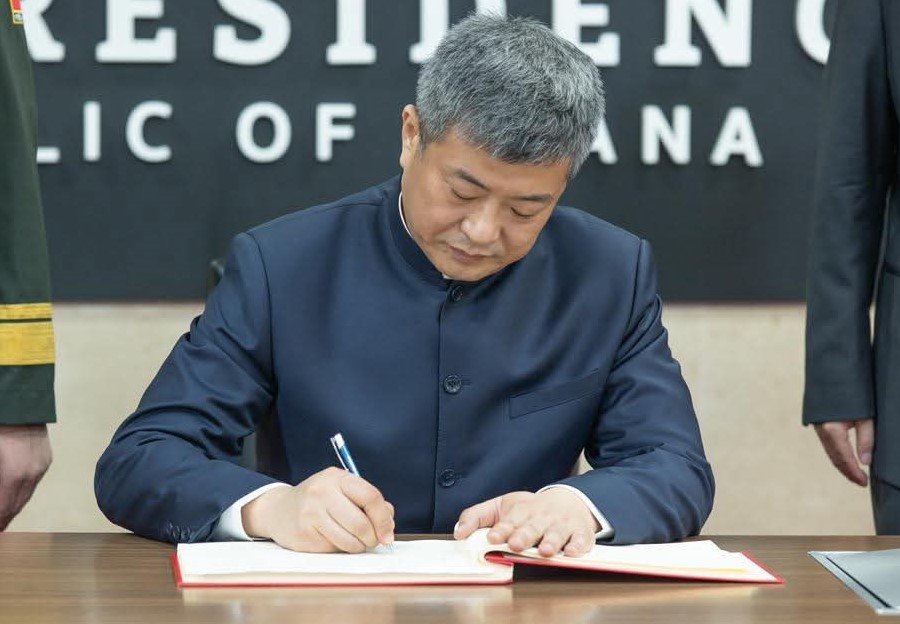
China’s Ambassador to Ghana, Cong Song, says China’s new zero-tariff policy for African countries will create major trade and economic opportunities for Ghanaian exporters.
Speaking during a press briefing in Accra, Ambassador Cong Song announced that China officially began implementing zero-tariff treatment on products from 53 African countries with diplomatic ties to Beijing from May 1, following an earlier announcement by Chinese President Xi Jinping at the 39th African Union Summit.
According to the ambassador, China has now become the first major economy in the world to unilaterally grant full zero-tariff treatment to all African countries with diplomatic relations with Beijing, as well as least developed countries with diplomatic ties to China.
Cong Song described the policy as a major step toward deepening China-Africa trade and investment cooperation amid global economic uncertainty.
“The zero-tariff treatment will undoubtedly bring unprecedented new opportunities to African countries, including Ghana,” he stated.
The ambassador explained that the policy would significantly reduce the cost of African products entering the Chinese market while improving the competitiveness of exports from countries such as Ghana.
He cited Ghanaian cocoa as an example, noting that cocoa products previously attracted tariffs ranging between 8 and 22 percent before the implementation of the new policy.
According to him, products including cocoa, cashews, shea butter, textiles and handicrafts from Ghana will now enjoy zero tariffs when exported to China, reducing market entry costs and increasing profit margins for exporters.
Cong Song further stated that the policy would encourage local processing and industrialisation across Africa by allowing African products to be processed locally before export to China.
He added that the initiative would also help diversify African exports, create jobs, support small and medium-sized enterprises and promote cooperation in areas such as digital trade, green industries and sustainable development.
The ambassador praised Ghana’s economic recovery efforts under the government’s “24-Hour Economy” and “Resetting Ghana” agenda, pointing to Ghana’s reported 6 percent GDP growth in 2025 and declining inflation figures as signs of strong economic momentum.
He noted that China remains Ghana’s largest trading partner and a major source of foreign investment.
According to Cong Song, bilateral trade between Ghana and China reached a record 14.1 billion US dollars in 2025, representing a 19.3 percent year-on-year increase.
The ambassador also touched on mining cooperation between the two countries, revealing that Chinese companies recently helped establish the China-Ghana Mining Association to support industry cooperation and local economic development.
On illegal mining, popularly known in Ghana as galamsey, Cong Song said the Chinese government firmly opposes illegal activities by Chinese nationals abroad and supports Ghana’s efforts to combat illegal mining and protect forests and water bodies.
“We share the same goal as Ghana: to protect forests and water resources, restore mining land, and achieve green and sustainable mining development,” he said.