



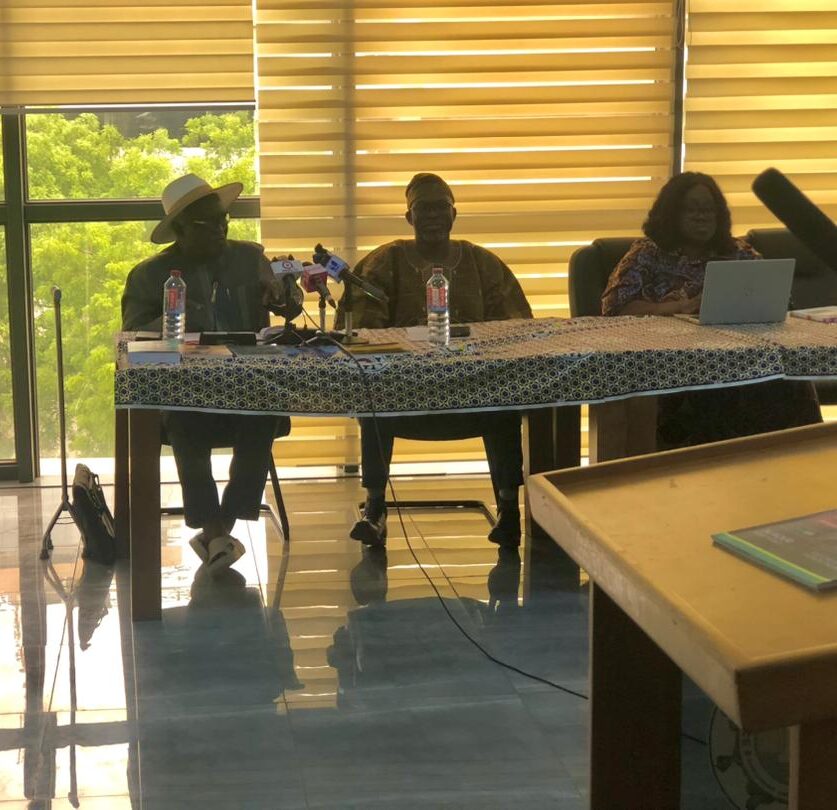
The Inter-Ministerial Coordinating Committee on Decentralization (IMCCoD) Secretariat on Tuesday, May 20, hosted media practitioners at a workshop aimed at equipping journalists and digital media professionals with deeper insight into decentralization and local governance reporting in Ghana.
The engagement sought to strengthen media understanding of decentralization policies and improve public education on governance issues at the local level.
Delivering the opening address was the Executive Secretary of the IMCC on Decentralization, Dr. Gameli Dominic Kewuribe Hoedoafia who described the gathering as a historic first step toward building stronger collaboration between the media and local governance institutions.
Describing decentralization as “government at the doorstep of the people,” he stressed the need for citizens to actively participate in decision-making processes that affect their communities and development.
According to him, local governance has gradually lost its significance over the years and must be revitalized by bringing governance closer to the people.
“Decentralization has been the focus of Government every now and then. It goes in cycles. How do we reduce the cyclical nature of political decentralisation?” he questioned.
Dr. Esther Offei-Aboagye also emphasized the importance of local governance in driving Ghana’s holistic development.
Her presentation centered on six thematic pillars of a newly developed decentralization policy framework: Political Decentralization, Administrative Decentralization, Decentralized Planning, Fiscal Decentralization, Local Economic Development, and Popular Participation and Accountability.
She however called for more transparent and efficient systems for restructuring local finance and improving revenue mobilization within districts and assemblies.
Also present was the Former Head of the Local Government Service, Professor Kwamena Ahwoi, also gave participants a detailed overview of Ghana’s decentralization journey and the current state of local governance in the country.
Professor Ahwoi further highlighted the successes and shortcomings of previous administrations in advancing decentralization reforms and local governance structures.
The media was strongly encouraged to prioritize and expand coverage of Metropolitan, Municipal and District Assembly (MMDA) proceedings through live broadcasts, regular interviews with assembly members, dedicated local governance programmes and coverage of annual district addresses to deepen public participation and accountability.
The Inter-Ministerial Coordinating Committee on Decentralization remains the country’s key institutional body responsible for coordinating decentralization policy and strengthening Ghana’s decentralized local governance system through reforms and inter-sectoral collaboration.