



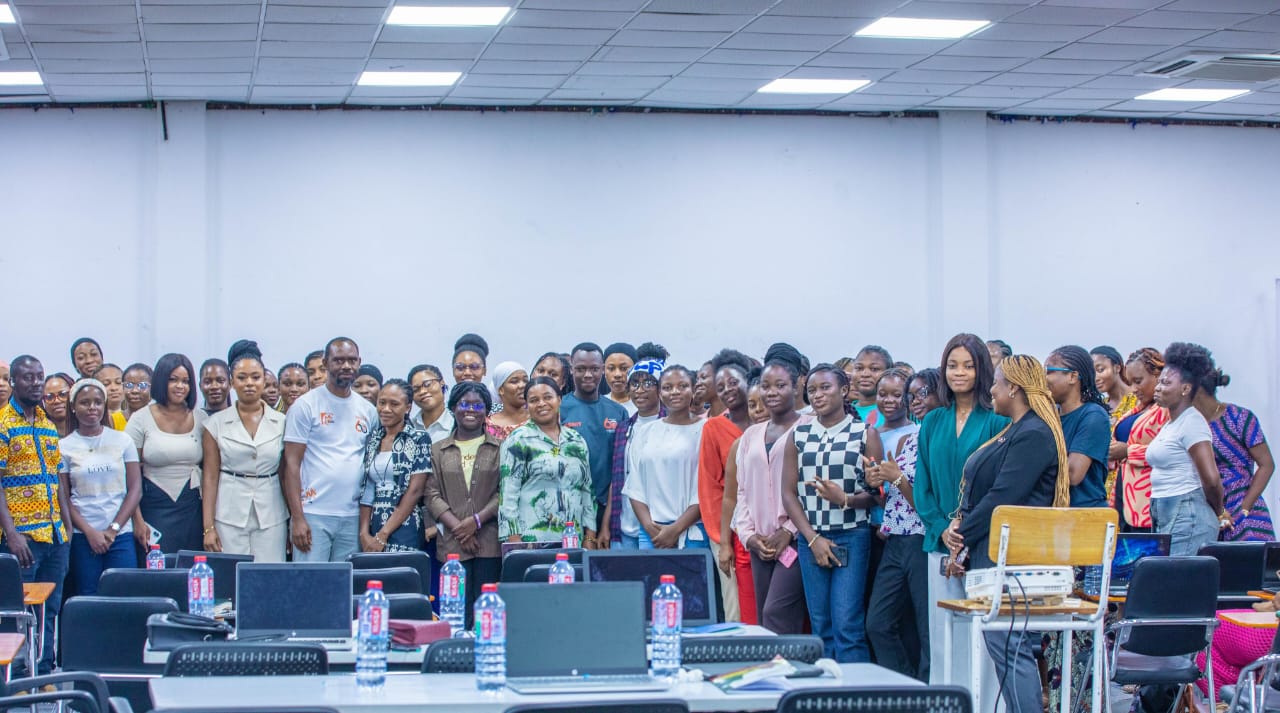
More than 300 women converged at the Accra Digital Centre over the weekend of 25 and 26 April 2026 for the Click-to-Cargo Programme, a two-day training initiative delivered by Ghana Digital Centres Limited (GDCL), to equip participants with practical skills in China importation, affiliate marketing, and digital business tools to enable them to compete in Ghana’s growing digital economy.
The programme, held at the John Mahama Block of the Accra Digital Centre, drew university students from institutions including the University of Ghana, UPSA, and Accra Technical University, as well as career women seeking to diversify and grow their incomes. Participants were taken through end-to-end training modules covering how to source products from China using platforms such as 1688, Taobao, and Pinduoduo; how to manage shipping logistics through both air and sea freight; and how to build and sustain an online business presence through shameless, consistent social media marketing.
Christine Ansong Esq., Deputy Chief Executive Officer of Ghana Digital Centres Limited and the architect of the initiative, said the programme represented a direct intervention against structural barriers that had long kept women at the margins of digital commerce.
“This programme is not simply a training event. It is a declaration that Ghanaian women belong at the centre of our digital economy, not at its margins. For far too long, the barriers to entry in digital commerce and global trade have been disproportionately high for women. The Click-to-Cargo Programme is our answer to that reality. We have designed every aspect of it, from the curriculum to the on-site financial services, to ensure that when a woman walks out of the Accra Digital Centre, she does not merely walk away with knowledge. She walks away with a business,” she said.
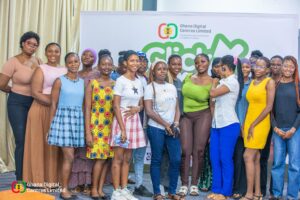
The training was facilitated by Bellissa Quaye, Chief Executive Officer of Bellissamay Enterprise, an importer with five years of business experience and three years of dedicated experience in teaching importation. Quaye, who has trained more than 2,000 people in the fundamentals of China importation, guided participants through the realities of sourcing and the nuances of dealing with Chinese suppliers, emphasising that China produces goods across a range of quality grades and that understanding those distinctions is essential for any importer aiming to build a credible and sustainable business.
Participants in the importation module learned that the process of importing from China involves far more than a simple transaction. They were taught the full scope of what importation requires, including product research, supplier negotiation, pricing and cost calculation factoring in customs fees and exchange rate fluctuations, payment processing, and shipping logistics that encompass customs clearance and final delivery. The training distinguished between two shipping methods available to importers: air shipping, which takes between seven and sixteen days, is relatively more expensive, and is suited to lightweight items and product samples; and sea shipping, which takes between thirty and sixty days, is considerably less expensive, and is appropriate for heavier or bulk consignments, with payment settled upon arrival of goods.
Beyond importation, participants were introduced to a suite of digital tools that form the operational backbone of a modern online business. They were encouraged to use tools such as Namelix and the Wix Business Name Generator to identify and secure authentic brand names, and to register those names formally to prevent brand theft. Canva was recommended for the design of logos, flyers, and promotional materials, while CapCut was highlighted as a practical tool for editing videos and images for marketing. Participants were also advised to harness the capabilities of ChatGPT to generate thirty-day content plans, structure their posting schedules, and ensure consistent visibility across social media platforms.
The affiliate marketing track complemented the importation training by showing participants how to earn commissions by promoting products online without the requirement of holding physical inventory. Participants learned how to identify the right platforms, build engaged audiences, and optimise content for conversions. The training stressed the importance of shameless marketing, encouraging participants to post content daily and advertise their businesses consistently and without reservation, noting that an online business that is not visible on social media is effectively closed.
The programme was sponsored by the National Petroleum Authority, the Social Security and National Insurance Trust (SSNIT), and Seabird, with additional institutional support from the Consolidated Bank Ghana (CBG), the Office of the Registrar of Companies (ORC), Access Bank, and legal firm RomanLevi and Associates.
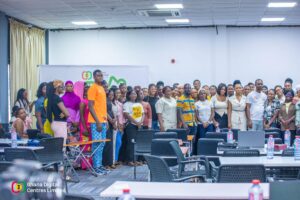
The deliberate assembly of banks, a legal firm, a registrar and a pension authority under one roof was central to the programme design. Rather than limiting the intervention to a conventional training exercise, GDCL structured Click-to-Cargo as a a complete business ecosystem. Participants left with not only the knowledge of how to import and market goods online but with the practical means to act on that knowledge immediately: access to business registration through the ORC, internationally enabled banking solutions through CBG and Access Bank, legal guidance through RomanLevi and Associates, and social protection awareness through SSNIT. The on-site presence of these partners removed the friction points that have historically prevented women entrepreneurs from formalising and scaling their ventures.
Christine Ansong Esq. noted that the integrated model was entirely intentional.
“We are unequivocally committed to ensuring that Ghana’s digital revolution is one that every woman in this country can not only witness but lead,” she said, adding that the concept of bringing every essential service directly to participants, rather than directing them elsewhere after the training, was what distinguished Click-to-Cargo from a conventional skills event. GDCL intends the model to serve as a replicable blueprint for future women-centred digital empowerment programmes across the country.